Performance, Suffering, and the Uncanny
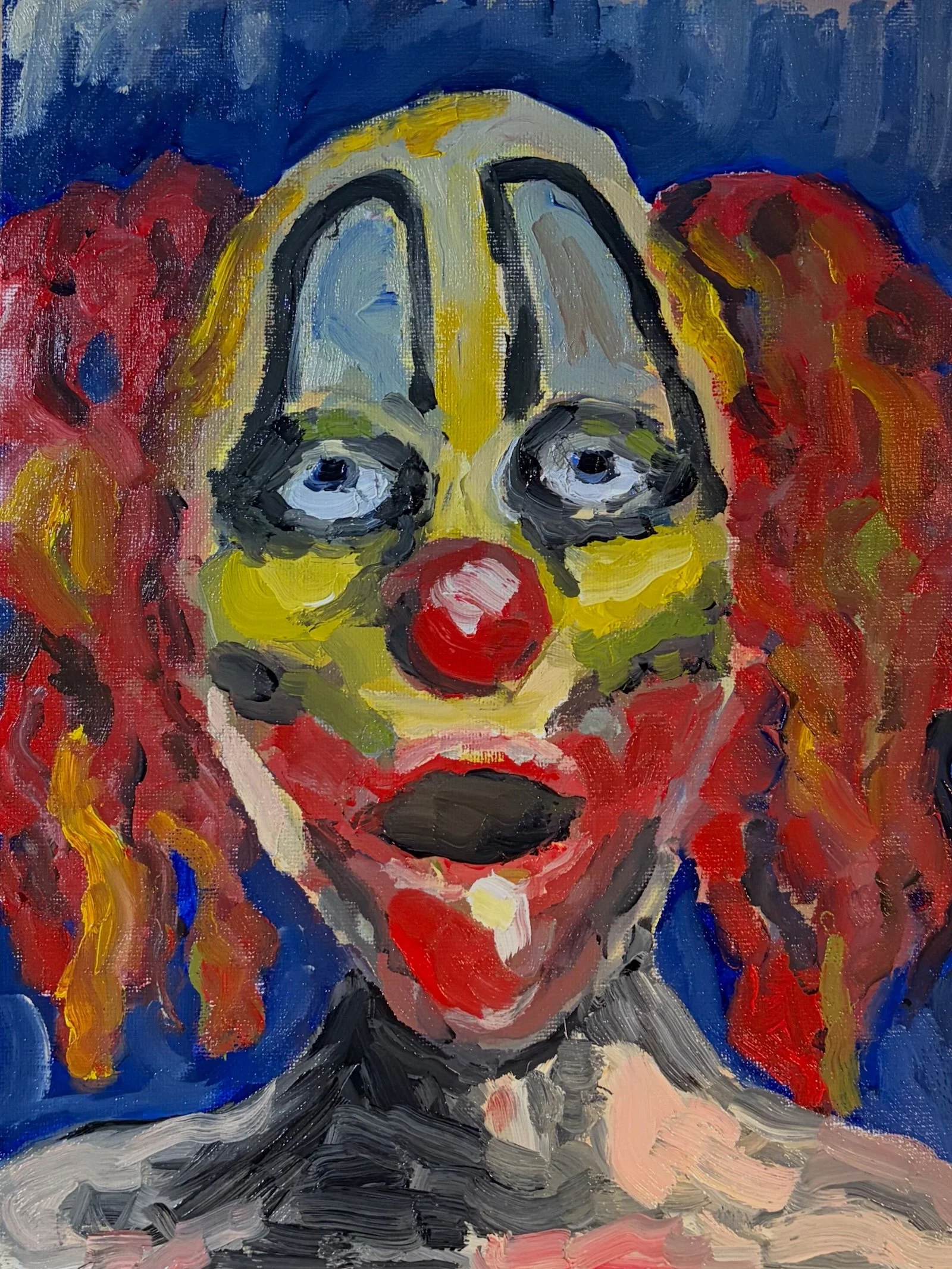
“Why Clowns?”
Sarah’s work uses clowns and other uncanny figures as emotional self-portraits. She is interested in the tension between performance and suffering, especially the ways people mask difficult emotions in order to appear functional, pleasant, or in control. The clowns become a symbol of emotional contradiction: exaggerated expression concealing genuine internal experience.
Emerging from a history of dissociation, her paintings explore the psychological consequences of denying one’s inner reality. Through distorted figures, smeared makeup, childlike imagery, and emotionally charged color, she examines masking, fragmentation, vulnerability, and the tension between performance and emotional truth. The work is not meant to glorify suffering, but to confront the quiet devastation created by repression and disconnection.
The discomfort present in the work is intentional. Sarah is interested in how viewers respond to images that feel emotionally exposed, theatrical, or catastrophic. The paintings ask the viewer to remain present with difficult emotions rather than instinctively turning away from them. Large-scale portraits force viewers into the emotional space physically, while smaller still lifes offer glimpses into the private worlds we construct and are constructed by. Her work exists in the space between horror and tenderness, spectacle and humanity, collapse and survival.